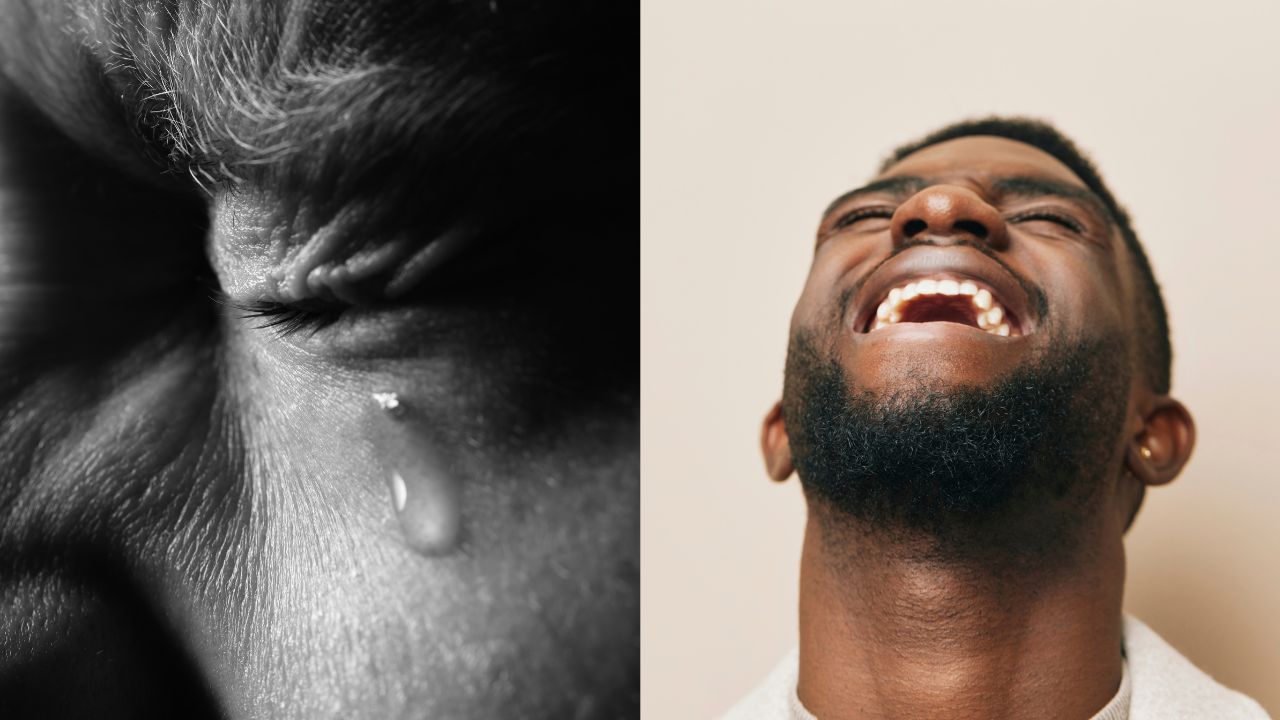
Emotions and Breathwork
It can catch people off guard. You come into a session expecting to relax, maybe feel a little calmer, and then something else happens. Emotion comes up, sometimes out of nowhere, sometimes stronger than expected. The first thought is usually, why is this happening?
Nothing has gone wrong. This is a normal response.
A lot of us are used to thinking of emotions as something that live in the mind, something you think about, talk through, or try to manage. But emotions aren’t just thoughts. They’re physical experiences. They show up as sensations in the body, tightness in the chest, a knot in the stomach, heat, pressure, movement. Even when we’re not fully aware of them, they’re still there.
Over time, especially in moments where something felt overwhelming or too fast to process, the body learns to hold those experiences instead of fully moving through them. Not as a problem, but as a way of protecting you.
Most of the time, we don’t notice this. We stay busy, distracted, in our heads. And the body adapts. But the patterns don’t disappear. They sit underneath the surface.
When you enter breathwork, you’re changing your internal state. Your breathing pattern shifts, and your nervous system begins to shift with it. Often, your body moves into a state that is more open than what you’re used to.
For some people, that feels calming. For others, it creates space for something that hasn’t had space in a while.
That’s usually when emotion starts to come up. Not because breathwork is creating something new, but because it’s allowing something that was already there to move. It might not come with a clear story. It might not make immediate sense. You might feel sadness without knowing why, or frustration, or even a sense of relief. All of that is valid.
One way to understand this is through the idea of incomplete responses. When something happens and your body isn’t able to fully process it in the moment, the response doesn’t always finish. The energy of it stays in the system. The body holds it.
Later, when conditions feel different, especially when there’s more safety or openness, those responses can begin to complete. That can look like emotion rising to the surface. Not as a problem, but as a process.
There’s also a physical layer to this. Certain styles of breathing can change your body’s chemistry, including levels of oxygen and carbon dioxide. This can increase sensitivity in the body and make sensations feel more noticeable. So what you’re feeling isn’t just emotional, it’s physiological too. Your system is more aware.
The most important thing to understand is this. You don’t need to force anything, and you don’t need to push it away. If something comes up, you can just stay with it. Let it move the way it wants to move. You don’t need to label it or figure it out in the moment.
And if nothing comes up, that’s just as valid. There isn’t a right experience to have.
Breathwork isn’t about chasing emotion. It’s about creating space. Sometimes that space feels quiet. Sometimes it feels full. Both are part of the process.
If you find yourself feeling emotional during a session, you’re not doing it wrong. You’re noticing something your body is ready to show you. And you don’t have to rush past that.